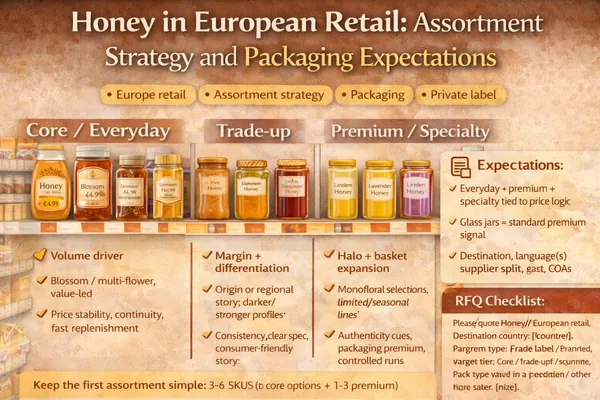
European retail honey shelves are typically built like a portfolio: one or two core SKUs deliver volume, while a smaller set of differentiated lines drive margin and shopper interest. For buyers, the practical priority is to align pack formats, label expectations, and documentation with the retailer’s operating model and price architecture.
1) How European shelves are commonly structured
| Tier | Shelf role | Typical positioning | What buyers optimize |
|---|---|---|---|
| Core / Everyday | Volume driver | Blossom / multi-flower, value-led | Price stability, continuity, fast replenishment |
| Trade-up | Margin + differentiation | Origin or regional story; darker/stronger profiles | Consistency, clear spec, consumer-friendly story |
| Premium / Specialty | Halo + basket expansion | Monofloral selections, limited/seasonal lines | Authenticity cues, packaging premium, controlled runs |
2) Packaging expectations (what “fits” European retail)
Packaging choices vary by retailer and category role, but buyers typically plan packaging as deliberately as product selection.
Core SKUs
- Standard shelf packs with reliable supply and consistent appearance across lots.
- Operational efficiency: carton and pallet configuration designed for distribution centers.
- Consumer clarity: straightforward naming and usage positioning.
Trade-up & premium
- Glass jars often used to signal quality and support premium shelf placement.
- Origin narrative: region/story elements become more important as price increases.
- Presentation: label finish, cap choice, and visual consistency can be part of buyer evaluation.
3) Label and documentation planning (what slows programs down)
Most delays are not caused by taste approval; they occur when labeling language, mandatory statements, or documentation expectations are clarified late. Start your supplier brief with:
- Destination country (and retailer if known)
- Label languages required
- Private label vs branded responsibility split (artwork, approvals)
- Compliance needs (spec sheet format, COA availability, batch info expectations)
4) Suggested starter assortment (practical, not exhaustive)
| SKU role | Candidate types | Why it’s used | Packaging cues |
|---|---|---|---|
| Core | Everyday blossom / multi-flower | Drives volume and repeat purchase | Standard pack sizes, efficient case/pallet |
| Trade-up | Pine honey / darker profiles | Distinct taste; strong differentiation | Glass or premium label cues depending on tier |
| Premium | Monofloral / origin-focused lines | Halo + gifting + basket expansion | Glass, stronger origin narrative, controlled runs |