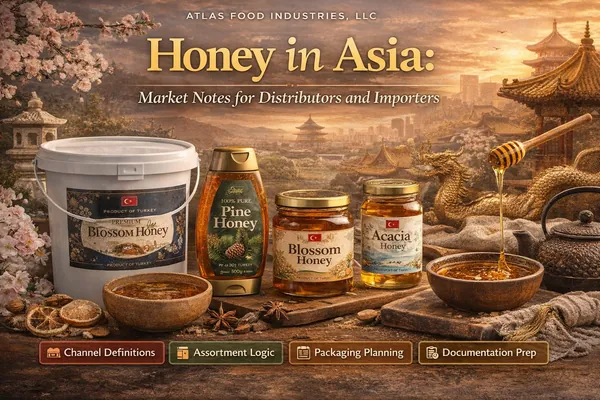
Importers serving Asia typically optimize for three things: a dependable everyday SKU, a clear differentiation SKU, and a premium line that supports gift, specialty, or premium retail. The operational priority is repeatability across shipments and clean alignment on labeling and documentation, so replenishment remains predictable.
1) Start with the channel: retail, foodservice, or ingredient
| Channel | Common buying logic | Packaging priorities | What to brief early |
|---|---|---|---|
| Retail | Portfolio assortment: volume + differentiated + premium. | Jars for shelf presence; squeeze for convenience segments. | Label language, pack sizes, target price tier, origin story depth. |
| Foodservice | Consistency and controlled serving; operational practicality. | Portion packs; squeeze formats for kitchens and cafés. | Usage context (hotel/café/bakery), expected weekly turnover, storage conditions. |
| Ingredient | Stable specs and predictable handling for production lines. | Pails and drums aligned to production schedules. | Spec parameters, batch/traceability requirements, delivery rhythm. |
2) Practical assortment strategy for distributors
Most distributor portfolios perform best when they are built as a simple three-layer structure. This keeps shelf logic clear and makes sales training easier across multiple customers.
| Layer | Role in the portfolio | Typical product direction | Why it works |
|---|---|---|---|
| Core (volume) | Drives turnover and repeat orders. | Everyday blossom-style honey. | Predictable flavor, stable demand, easier pricing. |
| Differentiation | Creates a reason to trade up. | Pine or strong regional line. | Distinct taste and story without becoming niche. |
| Premium | Margin and gifting/specialty retail. | Selected monoflorals or origin-focused lines. | Clear narrative; supports premium packaging and seasonal promotions. |
3) Packaging expectations and what buyers plan for
Packaging should match the channel and the reality of distribution: heat exposure, warehouse turnover, and last-mile handling. A practical packaging plan reduces complaints and improves repeat orders.
- Retail shelves: glass jars for premium cues; PET and squeeze formats for convenience-driven segments.
- Foodservice: portion packs for hygiene and portion control; squeeze formats for kitchens.
- Ingredient supply: pails/drums aligned to consumption rate and site handling equipment.
- Label readiness: local language, net weight, storage guidance, and required importer details.
4) Documentation and import readiness
Documentation requirements vary by destination and buyer category. Many professional buyers request specification details, batch information, and traceability support. Share your destination and compliance needs early to prevent delays.
- Destination country and port of entry
- Channel (retail / foodservice / ingredient)
- Packaging format and pack sizes
- Expected monthly/quarterly volume
- Label language and any mandatory statements