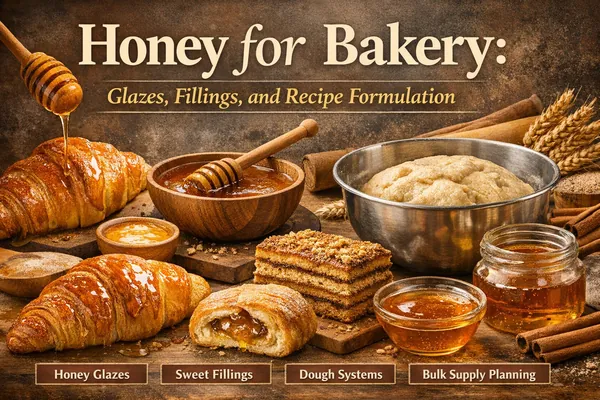
Honey is used in bakery for both sensory and functional reasons: it can deepen sweetness, add aroma, support browning, and help manage perceived moisture. In industrial settings, the key is repeatability—locking a consistent profile so your glaze shine, filling texture, and batch handling remain stable across runs.
1) Where honey fits in bakery applications
| Application | Why honey is used | What typically matters most |
|---|---|---|
| Glazes and finishes | Gloss, aroma, and premium positioning; helps create an “artisan” cue. | Viscosity at application temperature, color control, flavor intensity. |
| Fillings and spreads | Sweetness depth and aroma; supports signature flavor notes. | Crystallization behavior, stability in storage, batch consistency. |
| Doughs and batters | Flavor, browning contribution, and moisture perception. | Color consistency, aroma profile, dosing/flow behavior. |
| Layer cakes and inclusions | Flavor lift and “clean label” messaging in select recipes. | Lot-to-lot sensory alignment, label language compatibility. |
2) Recipe formulation considerations (what bakers plan for)
When honey is introduced into a formulation, teams typically plan around three practical areas: handling, sensory impact, and texture stability. Honey selection helps when you align on:
- Flow and dosing: consistent viscosity at the temperature you pump or pour.
- Color and aroma: prevent unintended shifts in crumb color, glaze tone, or top notes.
- Texture stability: minimize graininess risk in fillings and maintain consistent mouthfeel over time.
3) Selecting honey: production profile vs signature profile
| Use case | Typical choice | Why | Buyer focus |
|---|---|---|---|
| Core bakery SKUs | Consistent blossom-style honey | Predictable handling and a neutral-to-balanced profile. | Repeatability, documentation, stable reorder plan. |
| Premium / seasonal items | Regional or monofloral honey | Distinct aroma and stronger storytelling value. | Lot alignment, labeling language, and market compliance. |
4) Packaging and handling: aligning to bakery operations
Packaging choice is a process decision. The goal is to match format to your usage rate, storage conditions, and plant handling routines so honey remains practical to dose.
- Pails: practical for medium usage and easier internal movement.
- Drums: common for higher-volume bakery operations and more structured batch planning.
- Temperature handling: plan a controlled warming/flow approach that supports viscosity without overheating.